

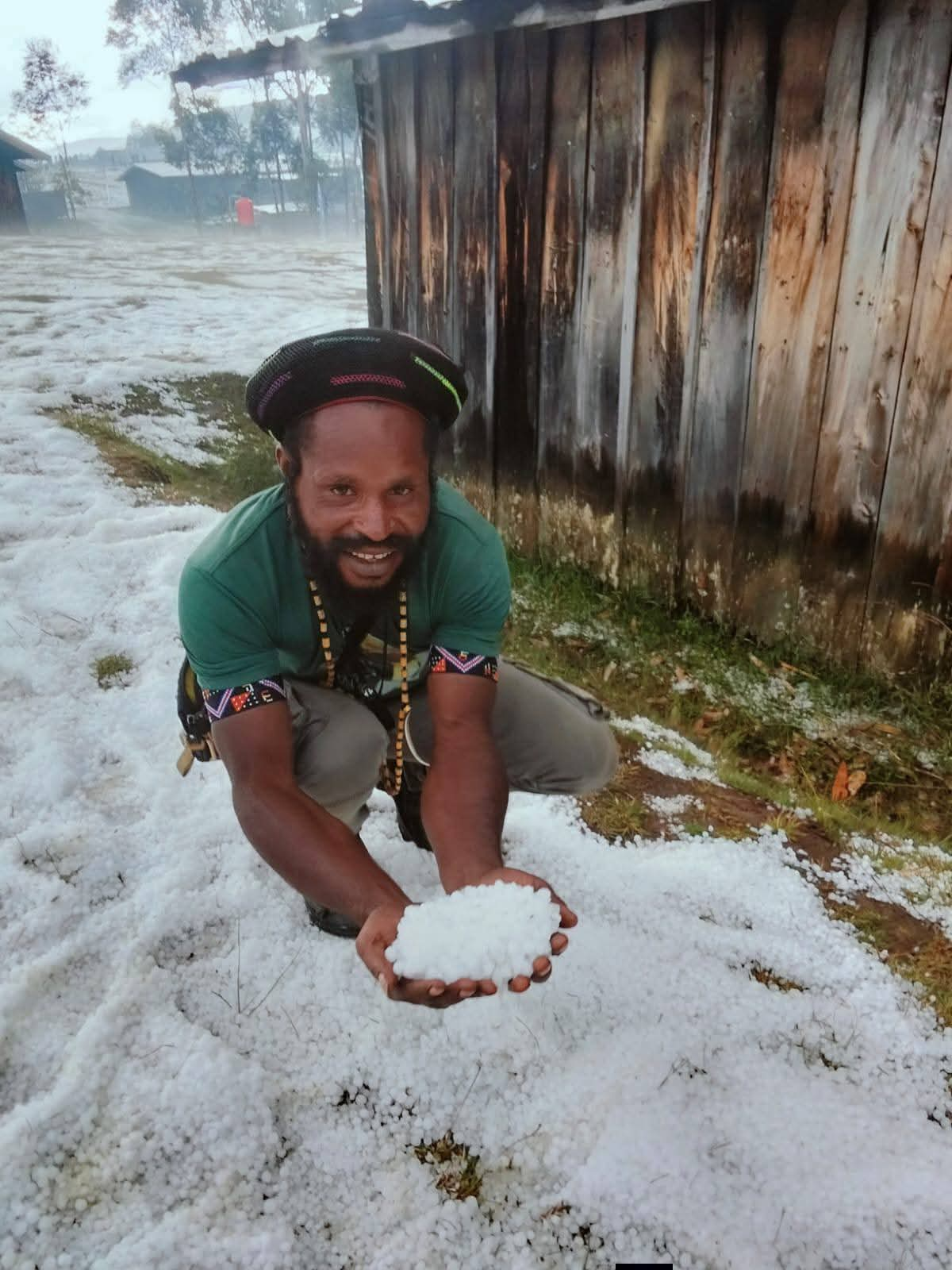
[A portrait of an indigenous young man in Kuyawage village, Lanny Jaya, posing while holding a patch of snow amidst the local settlement, August 16, 2026. Source: Resident’s document.]
Picture Story : Oskar Ugipa | Student Journalist at Atma Jaya University
Between August 3 and the peak of the event on August 16, 2026, Indigenous communities in the Lanny Jaya, Puncak, and Nduga regencies of Papua suffered a natural disaster involving massive accumulations of ice; nearly all their crops failed, and they faced severe hunger.
This was not the first such event for the Indigenous people of the Papuan highlands. They described it as the most extreme instance among many similar occurrences. AMAIPA Indigenous Voice spoke with local Indigenous community members about how the climate crisis is exacerbating their living conditions.
A recurring disaster that continues to be ignored
Agustinus Kogoya is a young Indigenous man from one of the affected villages in Lanny Jaya Regency—specifically Kuyawage, West Wano, and Gowaloem. Other affected areas include the villages of Agandugume, Lambwi, and Oneri in Puncak Regency, as well as various other villages across the Papuan highlands.
Agustinus explained that this disaster, which occurs every dry season, originates from Mount Carstensz—a peak considered highly sacred by the surrounding Indigenous communities.
“The drought lasts for months, and the situation is then worsened by blankets of snow and ice that cause all our crops to fail,” said Agustinus.
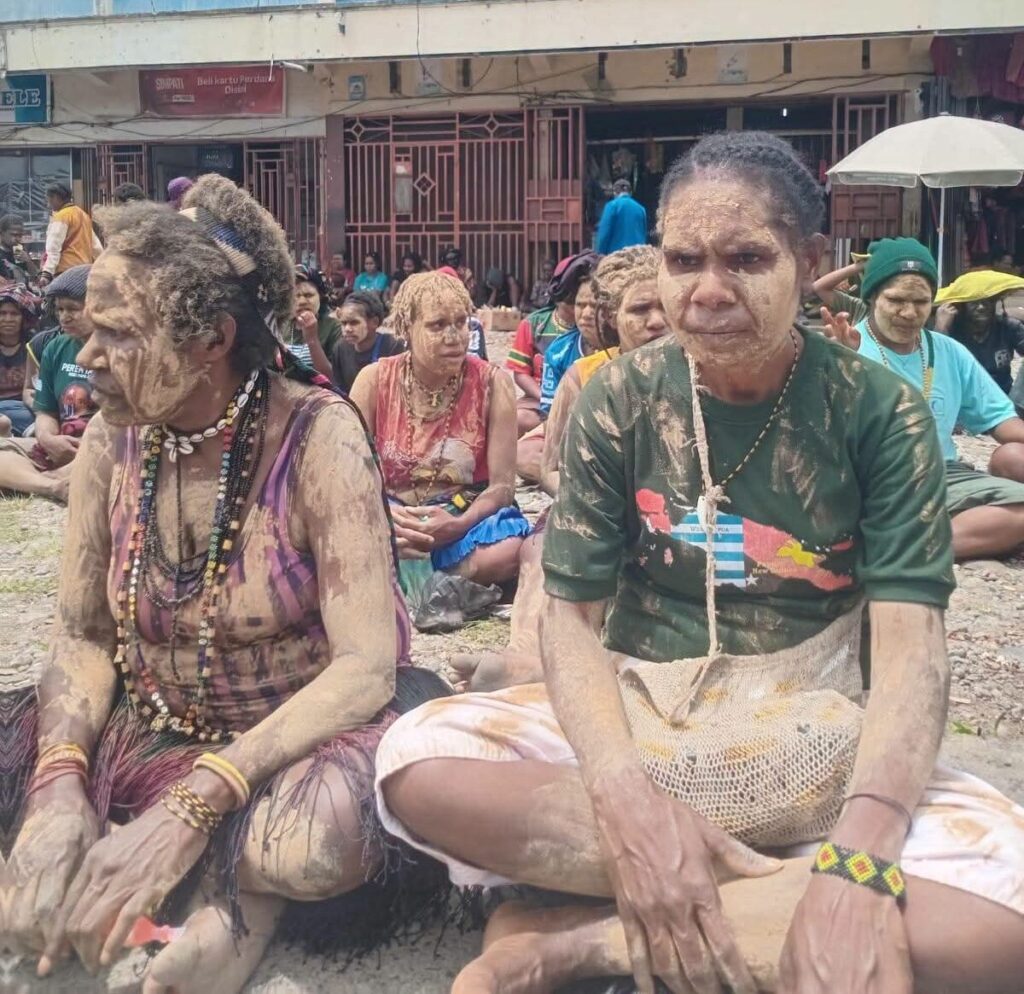
[ A protest involving smearing mud over their bodies—highlighting a humanitarian emergency—carried out by Indigenous people from the Highlands of Papua. August 18, 2026. Source: Resident documentation.]
“That snow originates from the peak of Mount Carstensz and spreads to our settlements,” he added.
For thousands of years, the mountain has been regarded as sacred and a hallowed site by the Indigenous tribes inhabiting the region.
Scientists predict that these last remaining tropical ice fields could soon disappear. For Indigenous communities, the mountain is an ancestor, and its whiteness signifies a protective presence. When the ice melts, what is lost is not merely frozen water, but a part of their identity. The ice cap surrounding Carstensz Peak has dwindled to just 16 hectares and is projected to melt away completely by late 2026 or early 2027, according to recent research by the World Meteorological Organization (WMO).
In an interview with BBC News Indonesia, researcher Marie Sabacka—a glacier ecologist at the Department of Ecology at Charles University in the Czech Republic—highlighted the ecological consequences of this loss. “Our findings show that the glacier supports unique communities of microorganisms and microscopic animals. They will go extinct as the glacier shrinks,” she said. This loss of ice is also a stark indicator of much broader climate change.
‘An Unforgettable Injustice’
Similar concerns are voiced by an Indigenous woman named Kumiyage, who is experiencing the profound impact firsthand.
Kumiyage is virtually powerless; she simply sits and reflects on the unfolding events. There is an injustice here that is hard to forget. These people live with a negligible carbon footprint—cooking with firewood, eating produce from their own gardens, and owning neither cars nor factories. Yet, they are the first to bear the consequences of warming driven by the outside world—by industrial emissions, deforestation, and an extractive economy that erodes their natural buffers. The Indigenous forests that once preserved moisture and water sources have now been partially opened up for concessions.
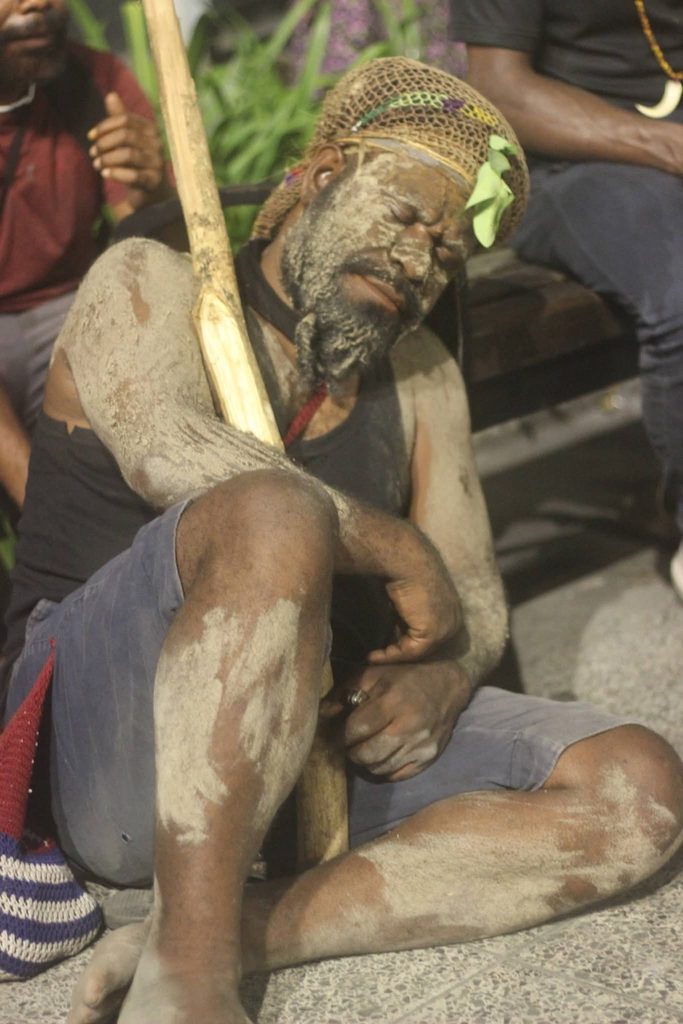
An indigenous young man appears exhausted after a fundraising drive for humanitarian disaster relief in Papua. August 18, 2026.
‘We Women Are the Most Affected’
Women in these highlands typically begin their day before sunrise. They light their stoves, hoist a noken (traditional woven bag) onto their heads, and walk for hours to their gardens. It is they who plant, tend, and harvest the crops, ensuring that sweet potatoes reach their families’ plates. When the rains fail and the dew turns to frost, it is women who feel the consequences first.
The burden is manifold. When the tuber harvest fails, mothers must walk further to find water sources and whatever tubers remain.
They cut back on their own food rations for the sake of their children. Exhausted and undernourished bodies become even more vulnerable when facing pregnancy, childbirth, and breastfeeding amidst dwindling food supplies. The remoteness of healthcare services further heightens these risks.
Yet, Indigenous women are not merely victims. They are the guardians of seeds, the keepers of knowledge regarding cold-resistant tuber varieties, and the inheritors of traditional methods for reading the land. Many mothers now exchange planting stock, stagger their planting times, and cultivate gardens in more sheltered locations.
This knowledge is rarely taken into account when decisions regarding climate, forests, and development are made—even though they are the ones who best understand what has been lost and what can still be saved.
“We women are the most affected,” she said. “So, we are the ones who must be heard first.”
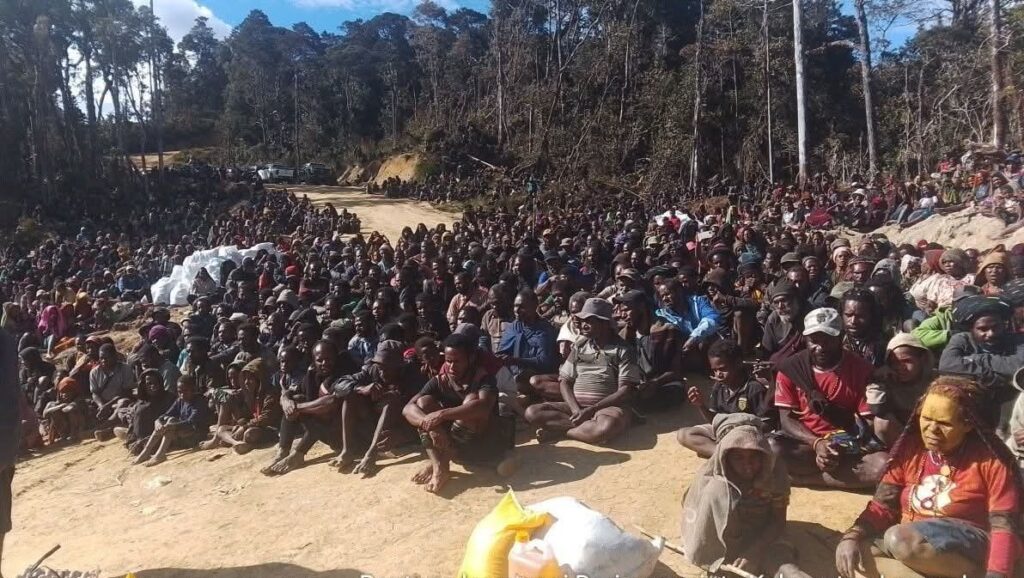
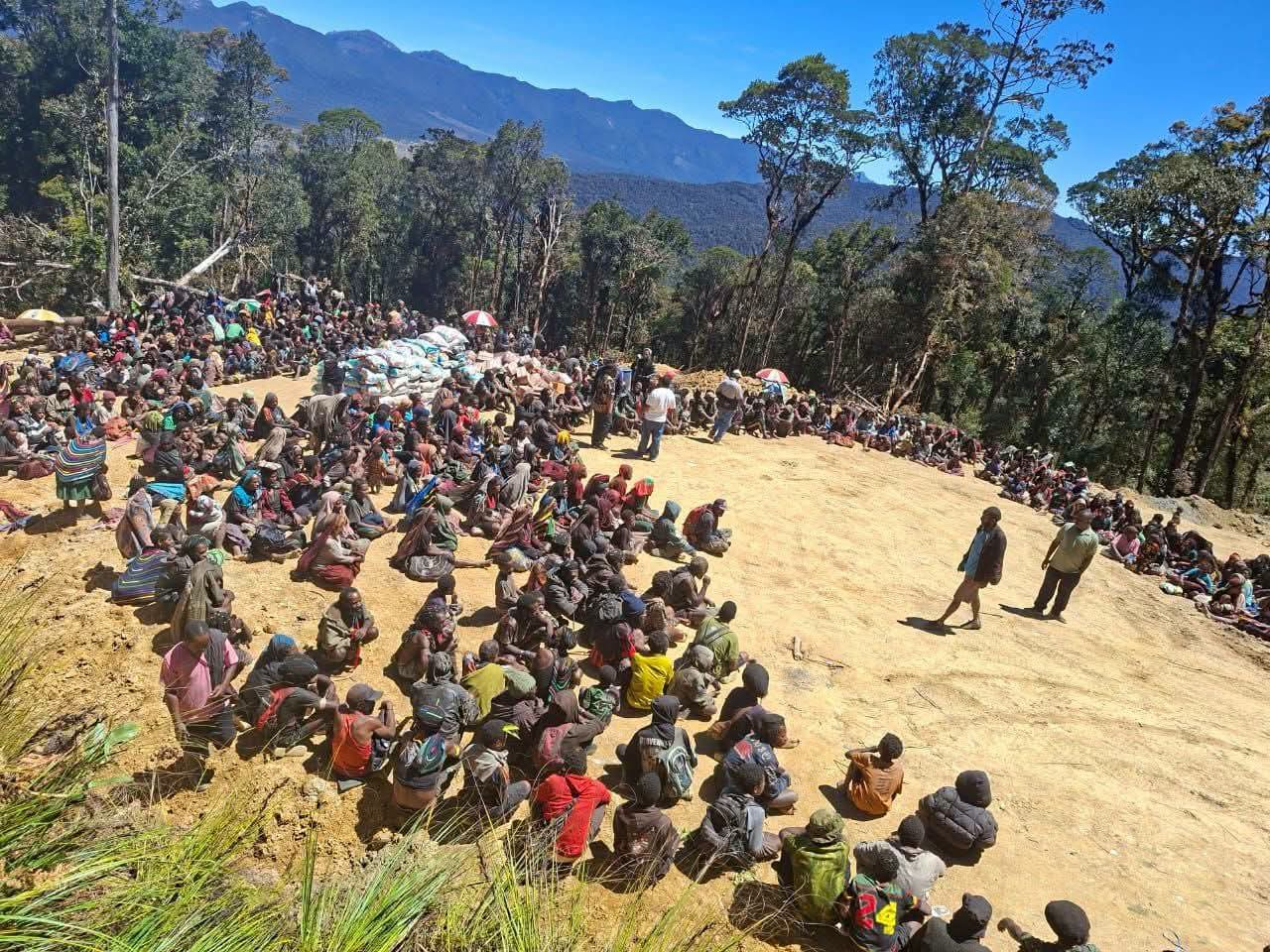
A scene showing thousands of indigenous people in a mountainous region awaiting humanitarian aid as they suffer the effects of severe drought and famine. 18/08/2026
Indigenous Papuans live with a virtually negligible carbon footprint. They cook with firewood, eat produce from their own gardens, travel on foot, and protect the forests that sequester carbon and retain water. They possess no factories, coal-fired power plants, or vehicle fleets. Yet, they are the ones who bear the consequences of global warming driven by industrial emissions originating far from their valleys.
The irony is compounded when their own customary forests are threatened by mining concessions, plantations, and large-scale projects. Forests that have long preserved moisture and water sources are cleared, while the very people who safeguard them are rarely consulted. They suffer a double blow: first from the changing climate, and second from decisions made without their input.
Women bear the heaviest burden.They are the ones who plant, tend the crops, and ensure their families are fed. When harvests fail, they walk further in search of water and tubers, cut back on their own food portions, and continue caring for their children despite their physical exhaustion.
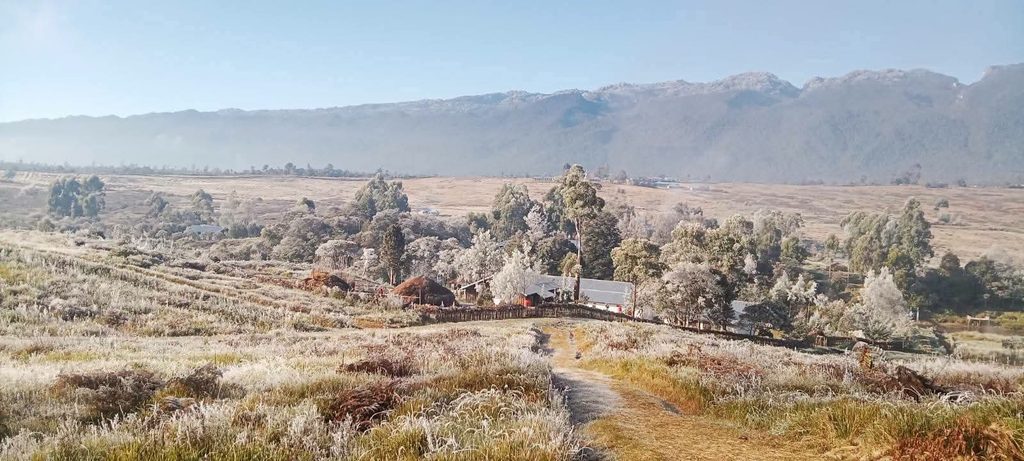
A view of an indigenous settlement in Kuyawage village, Lanny Jaya, blanketed in snow due to a prolonged dry spell. August 18, 2026.
Yet, they did not give up. The women exchanged seeds for cold-resistant sweet potatoes, adjusted their planting schedules, and established gardens in more sheltered locations. This local knowledge represents a form of adaptation that was already underway long before climate negotiators began discussing the subject.
The question is no longer whether Indigenous communities are affected. The question is why those who contribute the least are the ones least heard.
Climate justice means recognizing rights to customary land, involving communities in decisions that affect their lives, ensuring aid arrives on time, and halting the deforestation that exacerbates the crisis.
“We never lit the fire,” said Mama Yuliana, gazing at the increasingly pale peaks. “But we are the first to burn.”
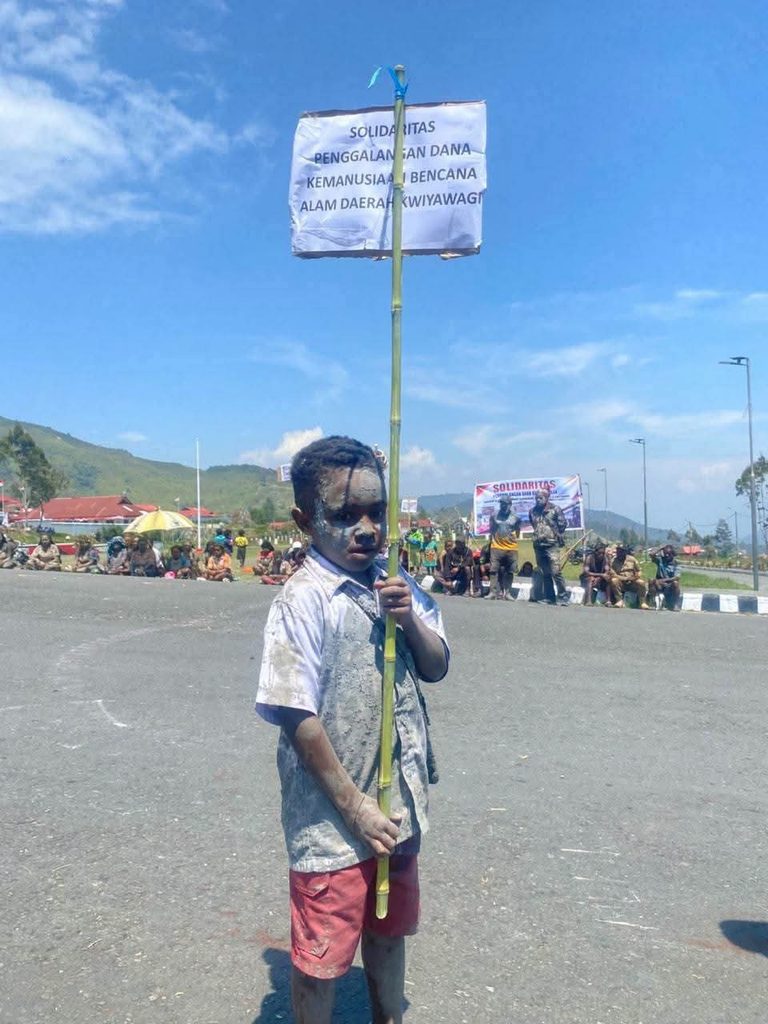
Seorang bocah kecil sedang berpose memegan tangkai yang bertuliskan ” Pengalanagan dana kemanusiaan bencana alam Kuyawage.18/08/2026
Belum ada komentar
Jadilah yang pertama menanggapi berita ini.